
Practical
Stop making pretty notes: blurting is the ugly 10-minute study method that works, and the blanks are the point
The blurting method: study a section, close it, write all you remember, then fill the gaps in red. Why it beats pretty notes, and the step most people rush.
Contents
The blurting method is a study technique: you read one section, close it, write down everything you remember on a blank page, then check against the source and fill the gaps in another colour. It works because it forces you to pull the material out of memory, and the gaps are where the learning happens, as long as you check them.
You spent the evening on beautiful notes: three highlighter colours, neat headings, a little diagram. They look like learning. Then the exam asks a question you “definitely read” and nothing comes out.
What is the blurting method?
Blurting is writing out, from memory and in no particular order, everything you know about a topic you just studied. The name comes from “to blurt out”: you dump it all without filtering. It spread through UK exam revision and student TikTok, and some universities now teach it, like Birmingham City University. The steps:
- Read one section with full attention.
- Close it and take a blank page.
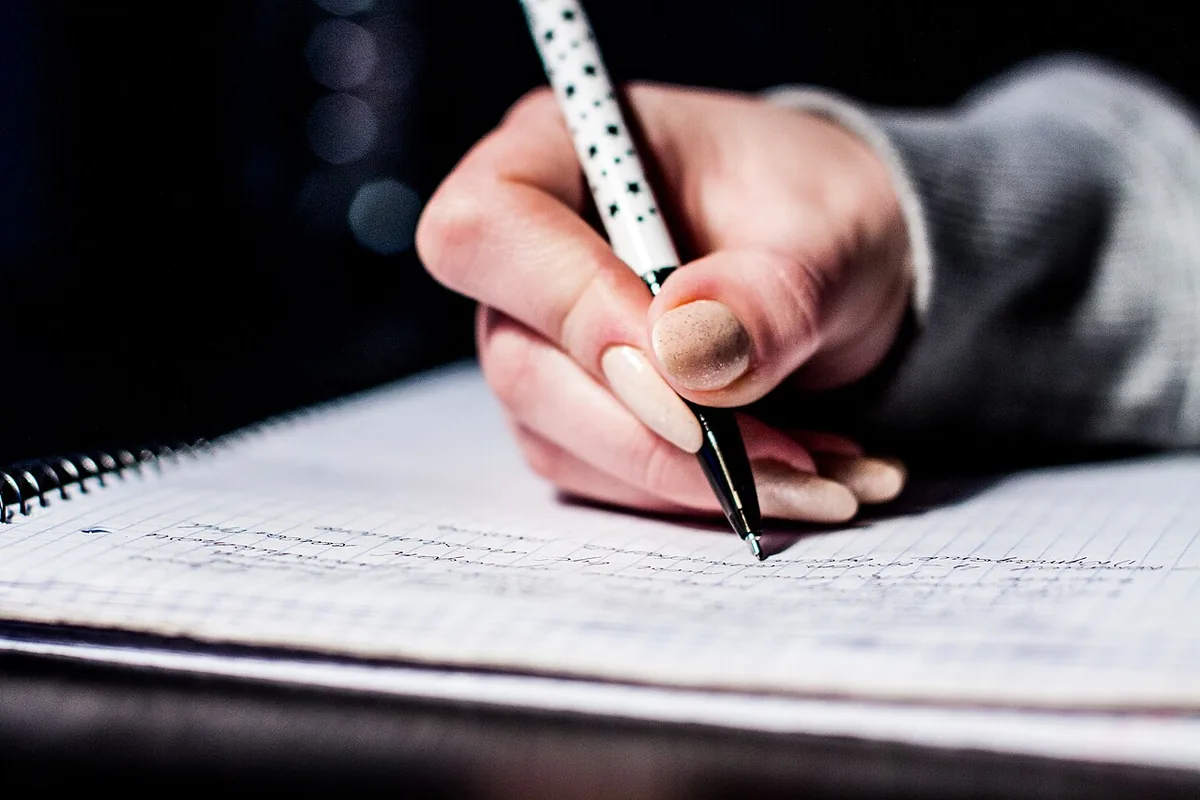
- Write everything you remember: keywords, sentences, arrows, a sketch, in any order.
- Open the source and check, adding what you missed in a different colour.
- Blurt again later, starting with the coloured parts.
Does the blurting method work?
Yes, because blurting is a form of retrieval practice, one of the best-tested study methods there is. Nobody has studied it under the TikTok name, but its scientific name, free recall, has been. In 2011, Jeffrey Karpicke and Janell Blunt had 200 students learn science texts. Some built concept maps with the text in front of them. Others read the text, put it away, and wrote down everything they could recall. A week later, the recall group remembered about 50% more than the concept-map group, including on questions that required making inferences (Karpicke and Blunt, 2011; the summary from Purdue).
The twist: most students had predicted the opposite. With the text in front of you, it feels like you know it. That’s the same illusion that makes rereading so misleading, and pretty notes are rereading with extra steps.
The step everyone rushes: checking the blanks
A half-empty page is not a failure: it’s a map of what to study next. In 2009, Nate Kornell, Matthew Hays and Robert Bjork showed that trying to answer and failing, then seeing the answer, leads to better learning than simply reading the question and answer together (Kornell, Hays and Bjork, 2009). The struggle prepares your memory to hold the correction.
But only if the correction comes. Blurt without checking and you rehearse what you already knew, mistakes included. So the check deserves as much care as the blurt: go line by line, mark what was wrong, and write what was missing in red. Those red lines are your next session.
How to do the blurting method tonight, in 4 steps
1. Pick a small chunk
One subheading, not a whole chapter. If you can’t blurt it in ten minutes, it’s too big, and you’ll end up staring at the page.
2. Read once, then close everything
Book and tabs closed, phone face down. Knowing you’ll write it all out changes how you read.
3. Blurt for 5 to 10 minutes
Write whatever comes, in any order. Keywords are fine, arrows are fine, a sketch is fine. When it dries up, wait thirty seconds before you stop: the last items often come late.
4. Check in red, then blurt the red tomorrow
Open the source and fill the gaps in another colour. Tomorrow, blurt the same section again and see if the red parts come back. One day later is when the forgetting curve bites hardest, so that second blurt is the one that makes it stay.
The red list is the part that gets lost in a notebook. With MemoryPilot, you dictate it in one sentence: “tomorrow at 6, blurt the Krebs cycle again: I forgot the two carbon dioxide steps”. It comes back at 6, gaps included.
Blurting, flashcards or the Feynman technique?
All three are retrieval practice; they just pull different things out of memory.
- Blurting: for a whole topic with connected ideas, like a history chapter, a biology process or an essay plan. It shows what you can produce, and how it fits together.
- Flashcards: for isolated facts, like vocabulary, dates or formulas. One question, one answer, easy to space out.
- [The Feynman technique](/en/blog/feynman-technique): for a mechanism you need to understand, not just recall. You explain it simply, notes closed, until the gaps show.
The surprise: you don’t even have to write it
Megan Smith, Henry Roediger and Jeffrey Karpicke compared two ways of practising recall: overt, saying or writing the answer, and covert, simply thinking it in your head. The silent version helped retention as much as the written one (Smith, Roediger and Karpicke, 2013).
So blurting works typed, spoken, or in your head on the bus. What counts is pulling it from memory, not the handwriting. Writing simply makes the check easier, because you can see what’s missing. On a walk, try saying the section out loud into a voice memo, then check it at your desk. For the rest of the toolkit, see how to remember things.
Frequently asked questions
What is the blurting method of studying?
Blurting is a study technique where you read a section, close your notes, and write down everything you remember on a blank page, in any order. You then compare your page with the source and add what you missed in a different colour. Those gaps become the focus of your next study session, ideally the following day.
Does the blurting method work?
Yes. Blurting is a form of retrieval practice, which research consistently finds more effective than rereading or making notes. In a 2011 study, students who wrote down everything they recalled from a text remembered about 50% more a week later than students who built concept maps. It works best when you check your gaps afterwards.
Does blurting work with typing?
Yes. The benefit comes from pulling information out of memory, not from handwriting. Research by Smith, Roediger and Karpicke found that even silent recall in your head helped retention as much as written recall. Typing is fine; what matters is that your notes stay closed until you have finished, and that you check the gaps.
Blurting vs Feynman technique: which is better?
Neither is better overall; they suit different material. Blurting is best for a whole topic with many connected facts, because it shows what you can produce from memory. The Feynman technique is best for a mechanism you need to understand, because explaining it simply exposes gaps in your reasoning. Many students blurt first, then explain the hardest part.
Stop trying to remember everything.
MemoryPilot is free to start, and doesn’t ask for a credit card.