
Understand
It’s not the dishes that wear you out, it’s remembering them: the mental load in 4 steps, and how to put it down
The mental load is thinking of everything for everyone: noticing, researching, deciding, checking. Why it wears you out, and four ways to actually share it.
Contents
- What is the mental load?
- The 4 invisible steps behind every chore
- Why the mental load is exhausting, even when chores are shared
- The mental load checklist: who thinks of it first?
- How to share the mental load: four moves
- The detail that changes everything: it’s not thinking about it, it’s being answerable for it
- Frequently asked questions
The mental load is the invisible work of thinking of everything for a household: noticing what’s missing, planning ahead, finding options, checking it got done. It wears you out because it never switches off and nobody sees it. Sharing it doesn’t mean splitting chores: it means handing over whole areas, from the first “we should” to the last “done”.
It’s 10:40 p.m. and the light is off. You’re out of toothpaste, the school lunch form is due Friday, Emma’s birthday party is Saturday and there’s no present, the car is due for its inspection. Nobody asked you to keep track of all that. Nobody will if you don’t.
What is the mental load?
The mental load (also called cognitive labor or invisible labor) is the ongoing management work that keeps a household running: knowing what needs doing, when, and making sure it happens. It isn’t doing the grocery run, it’s knowing you’re out of milk. French sociologist Monique Haicault described it as early as 1984, watching working women run their homes in their heads at the same time, a “routine management of a life split in two” (in French).
The idea went mainstream in 2017 with French cartoonist Emma’s comic “You Should’ve Asked”. Its key point: whoever says “you should have asked me” casts themselves as the helper, and leaves the other person as the household’s project manager. And managing is work.
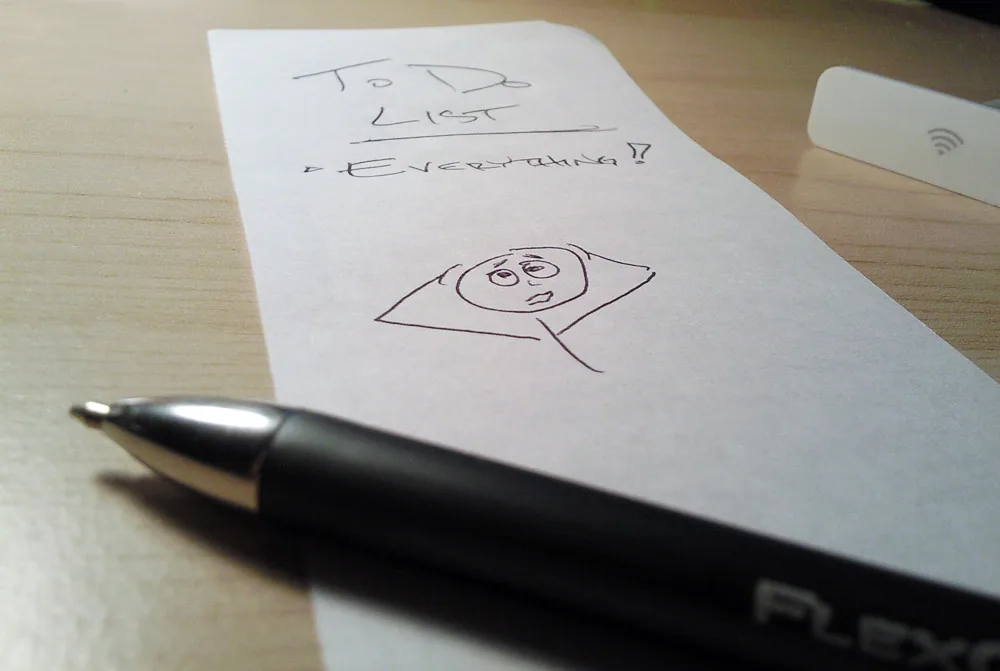
The 4 invisible steps behind every chore
In 2019, Harvard sociologist Allison Daminger interviewed 35 couples and broke this work down into four steps (Daminger, 2019): anticipating a need, identifying options, deciding, and monitoring the result. Take something as simple as a kid’s shoes:
- Anticipate: notice their toes are hitting the end, and school starts soon.
- Identify options: which size, which store, what budget, sneakers or boots.
- Decide: “let’s get those.”
- Monitor: check they were bought, that they fit, and that rain boots aren’t needed too.
Why the mental load is exhausting, even when chores are shared
A chore ends. The mental load doesn’t. It runs in the background like an app you never close, and every “I mustn’t forget” takes up a little room. A crowded head also forgets more of everything else, which is how the doorway effect works.
Unfinished goals keep popping back into your mind, unless you’ve written down a specific plan for them (we covered it in our piece on procrastination). The mental load is a hundred unfinished goals never written down anywhere.
The mental load checklist: who thinks of it first?
Before you share it, you have to see it. Each of you, separately, go through this list and write down, for each line, who notices it first. Not who does it: who thinks of it.
- Health: doctor and dentist appointments, vaccines, prescription refills.
- School and kids: sign-ups, field trips, parent-teacher meetings, clothes that no longer fit, presents for friends’ birthday parties.
- Home: what’s running low in the fridge, bills, what’s broken, the deep cleaning.
- Family and friends: birthdays, gifts, calling the grandparents, returning invitations.
- Paperwork: taxes, insurance, car inspection, passports about to expire.
Then compare: you can’t share a load only one of you can see.
How to share the mental load: four moves
1. Hand over whole areas, not tasks
“Can you pick up some shoes?” leaves the anticipating and the monitoring with whoever asked. “The kids’ clothes are yours, start to finish” hands over all four steps. Same for the car, your side of the family’s birthdays, the dentist. One area, one owner.
2. Retire “just tell me what to do”
That sentence is well meant, and it adds a task: working out what to delegate, then explaining it. Try instead: “What can I take off your plate completely?”
3. Let the other person do it their way
Handing over an area includes how it’s run. Checking up on it means taking back the monitoring, and with it the load. The shoes may not be the ones you’d have picked, and that’s the price of not having to think about them.
4. Get the list out of your head
As long as it lives in one head, it can’t be shared. Write down every “we should” with a time (“Thursday, book the dentist”), in a shared list or a memory that reminds you. Whatever stays in your head, the forgetting curve wears away within days.
That’s what MemoryPilot does: you say “remind me of Emma’s birthday on October 24, every year”, then “Emma loves puzzles”. The reminder goes off every year, and when you’re hunting for a gift, you ask “what does Emma like again?”. One less thing spinning at night.
The detail that changes everything: it’s not thinking about it, it’s being answerable for it
In 2014, sociologist Shira Offer followed hundreds of American parents who reported, several times a day, what they were thinking about. The surprise: mothers and fathers thought about family matters just as often. But those thoughts were tied to stress and negative emotions only for mothers (Offer, 2014). Her explanation: mothers carried the responsibility for family life, so their thoughts took the shape of worries.
And if the tiredness won’t lift, your sleep has suffered for weeks, or everything feels heavy, talk to your doctor. That isn’t a lack of organization.
Frequently asked questions
What is the mental load?
The mental load is the invisible work of thinking of everything for a household: noticing what’s needed, planning, researching options, deciding and checking it got done. It isn’t doing the chores, it’s being responsible for them. Sociologist Monique Haicault described it in 1984, and the comic “You Should’ve Asked” made it famous in 2017.
Why do women carry the mental load?
Because anticipating and monitoring, the invisible steps, fall to them more often, even when chores are split. A 2019 Harvard study observed this in different-sex couples, while decisions were roughly shared. But it lands on anyone who becomes “the one who remembers everything”, whatever the household.
How do you share the mental load in a relationship?
Make it visible first: each partner lists who notices each thing first, then you compare. Then hand over whole areas (kids’ clothes, the car, birthdays) instead of single tasks, let the owner run it their way, and get the list out of your heads by writing it down with dates.
Stop trying to remember everything.
MemoryPilot is free to start, and doesn’t ask for a credit card.